
Getting rejected from an art call is discouraging, especially when you have no way of knowing whether your work was the issue, or whether the competition was simply very tough.
Most artists apply without knowing what their real odds are. Acceptance rates are rarely published. When they are, the numbers usually come directly from the organizers running the show, which makes them hard to verify.
So, we went to the source. We pulled anonymized submission and jurying data directly from EntryThingy's platform (across hundreds of completed shows and tens of thousands of juried submissions) to give you the clearest picture we've seen of how competitive art calls actually are.
We break it down by judging model, medium, experience level, and submission timing, so you know exactly what you're walking into before you apply.
How We Collected and Analyzed This Data
At EntryThingy, we regularly analyze data on our platform to help artists make more informed decisions.
Earlier this year, we published a breakdown of how much art call entry fees cost in 2026. This study follows the same approach, but this time looking at acceptance rates.
We pulled jurying data from art calls listed and managed on EntryThingy, focusing on shows where jurying was substantially complete, meaning the large majority of submitted entries or pieces had received a final decision from the juror.
The result is a dataset drawn from hundreds of real, completed shows spanning a wide range of mediums, regions, and exhibition types.
Every percentage in this article reflects actual acceptance decisions made by jurors.
How Selective Are Juried Art Shows? The Numbers Might Surprise You
Getting into a juried art show is more accessible than many artists realize, and the data backs that up.
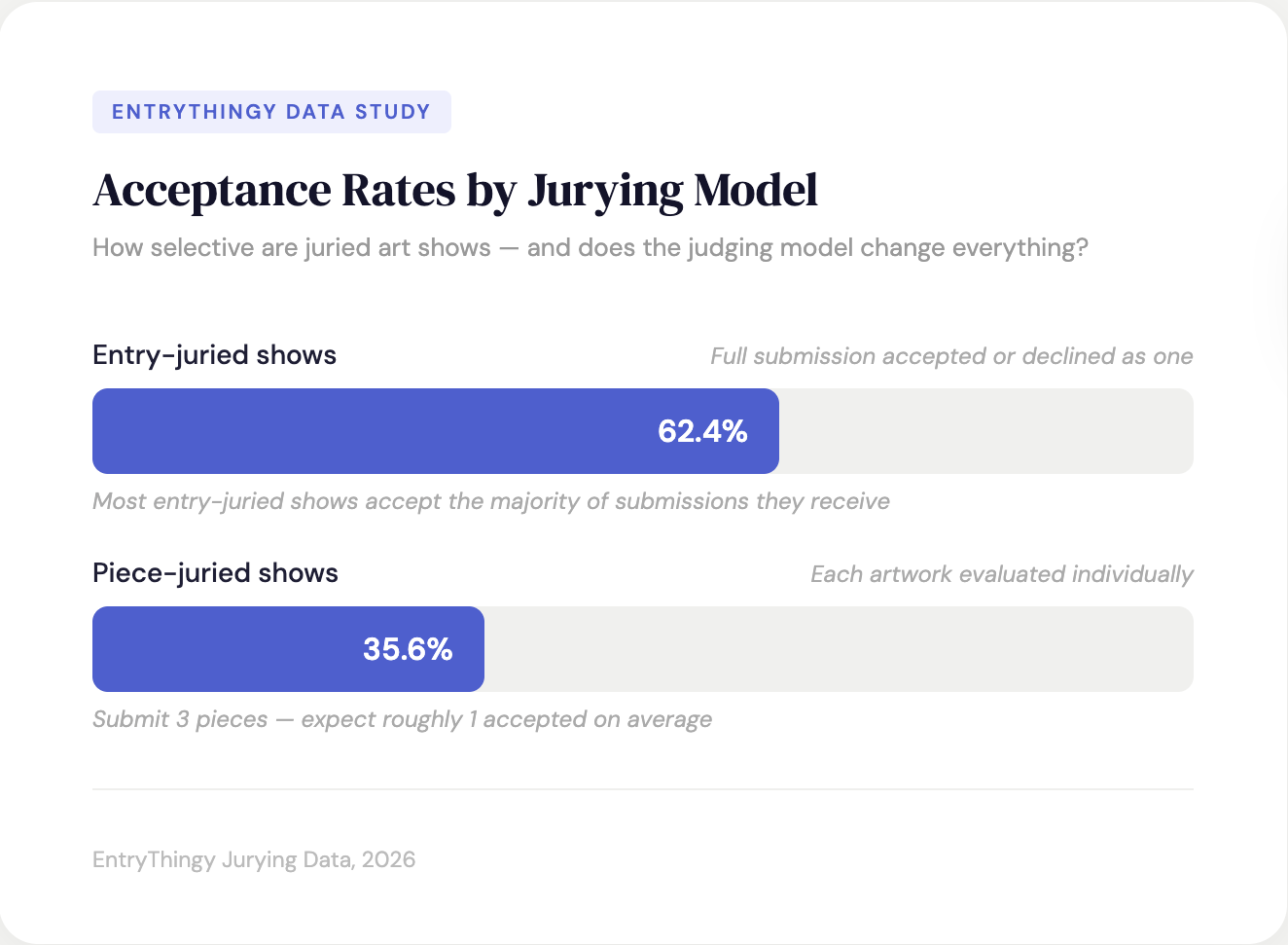
On EntryThingy, art shows fall into two different jurying models, and each one produces different results for artists.
In entry-juried shows, the juror reviews your full submission as one package and either accepts it or declines it as a whole. Across those shows, 62.4% of entries are accepted. That means the majority of submissions receive a yes.
In piece-juried shows, the juror evaluates each artwork separately. A single submission of three pieces might result in one accepted and two declined. Across those shows, 35.6% of individual pieces are accepted.
The judging model matters more than most artists realize. In piece-juried shows, jurors evaluate each artwork on its own terms, which means even a strong overall submission can have individual pieces declined.
That is not a reflection of the overall quality of your work. In entry-juried shows, the decision is all-or-nothing, but the data shows that rejection happens far less often than artists tend to expect.
Which Art Medium Has the Highest Acceptance Piece Rate in Juried Shows?
According to our study, colored pencil leads at 45.6%, encaustic sits at the bottom at 26.6% — but most mediums cluster between 33% and 45%, so the playing field is closer than you'd think.
Here's what the full breakdown looks like across 20 mediums.
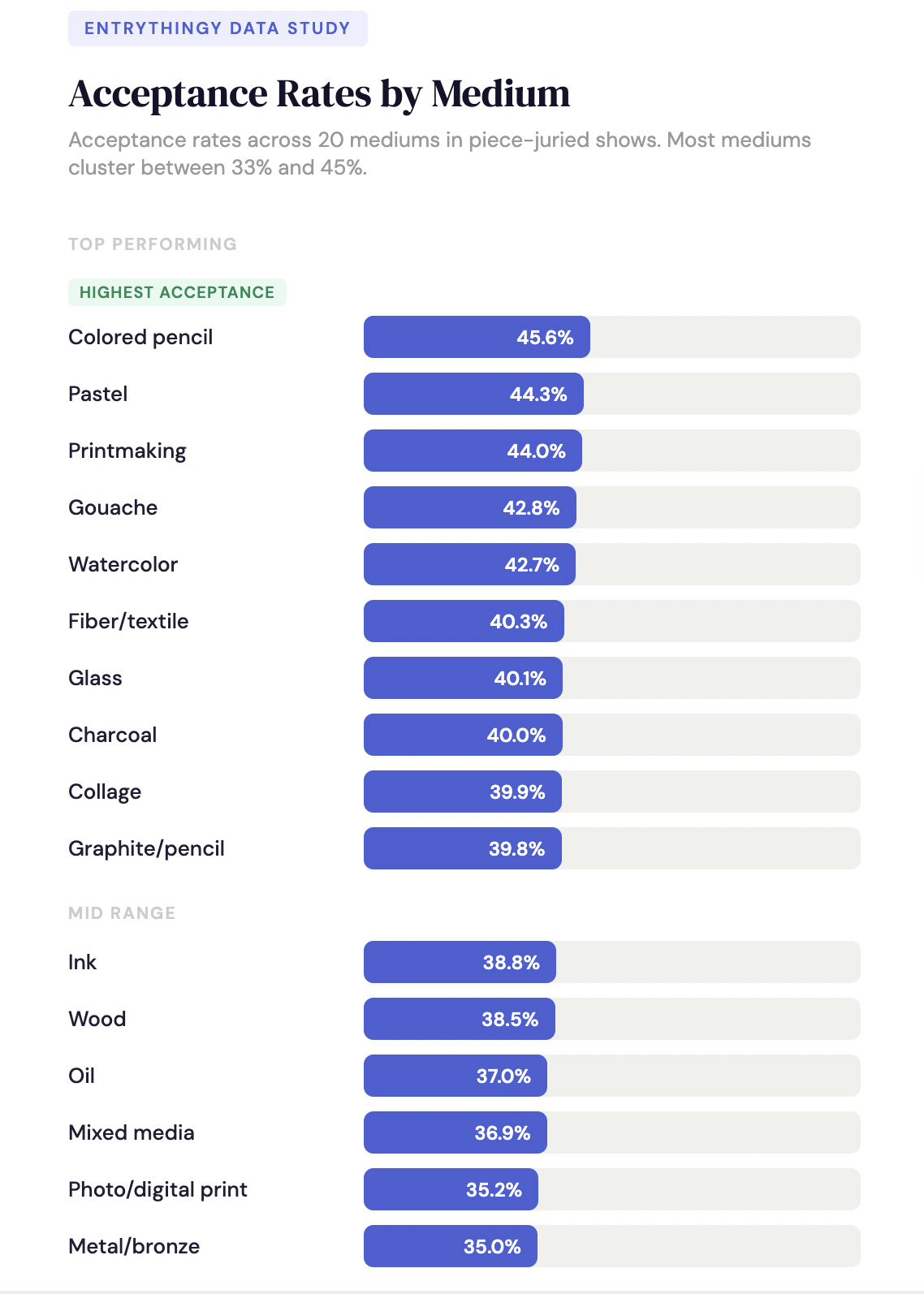
Works on paper take the top spots across the board. Colored pencil, pastel, printmaking, gouache, and watercolor all photograph cleanly and consistently. In digital jury review, where a juror is scrolling through hundreds of images on a screen, a crisp and well-lit work on paper reads clearly. The medium makes a strong visual impression before the juror even evaluates the art itself.
Acrylic and oil sitting in the bottom half is less about quality and more likely about volume. These are the most submitted mediums on the platform, and when everyone is submitting oil paintings, the math works against you. More competition in the same pool means a lower acceptance rate, even if the work is strong.
Photography and digital work face a similar dynamic. Lower barriers to creating and submitting work at scale likely mean these categories attract far more submissions, without a matching increase in available spots.
Encaustic at 26.6% is worth a separate conversation. It's the one medium where the format itself may be working against artists: layered, textured encaustic work is difficult to photograph well, and digital jury review doesn't do it justice. If you work in encaustic, seeking out shows that specifically invite it may matter more than for any other medium.
The bottom line: don't read this as a reason to switch mediums. Work in what you work in, and find shows actively looking for it. If you are applying via EntryThingy, you can filter calls by medium before applying.
Do Artists Who Apply More Get Accepted More Often?
The data shows the answer here is a clear and resounding yes. Artists who have submitted more times on EntryThingy tend to get accepted more often. The pattern is consistent and clear across the data.
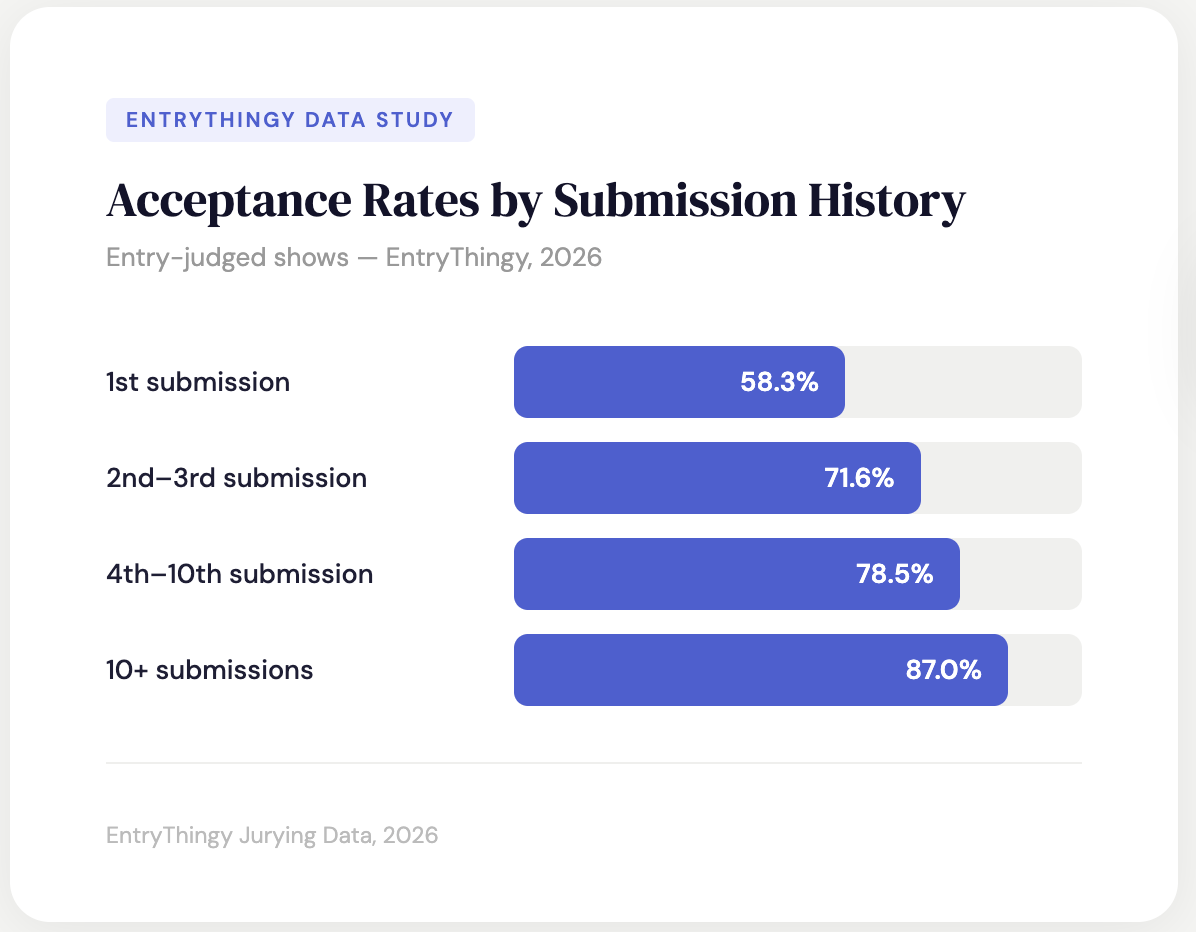
First-time submitters are accepted at 58.3%. By the second or third submission, that rate jumps to 71.6%. Artists with 4 to 10 submissions reach 78.5%.
The biggest single improvement happens early — between the first and second or third submission, a gain of 13 percentage points.
It is important to read this data carefully. This is correlation, not causation.
Submitting more times does not automatically improve your chances. What the data most likely reflects is two things happening at the same time:
- Artists who get accepted early tend to keep going, while those who face rejection may stop submitting altogether.
- Artists who keep applying tend to get better at it over time, with stronger portfolio photography, tighter artist statements, and smarter show selection.
The takeaway is not to submit everywhere and hope for the best. It is the skills you build by applying that get sharper with practice. For many artists, the gap between a 58% and an 87% acceptance rate is not about talent. It is about iteration.
If you're still building out your submission materials, our guide on how to build an artist portfolio for calls covers what jurors actually look for.
Early vs. Last-Minute Submitters: How Acceptance Rates Compare
Artists who submit in the first 25% of a call's window are accepted at 75%. Those who wait until the final 25% are accepted at just 60%. Here's what's actually driving that gap:
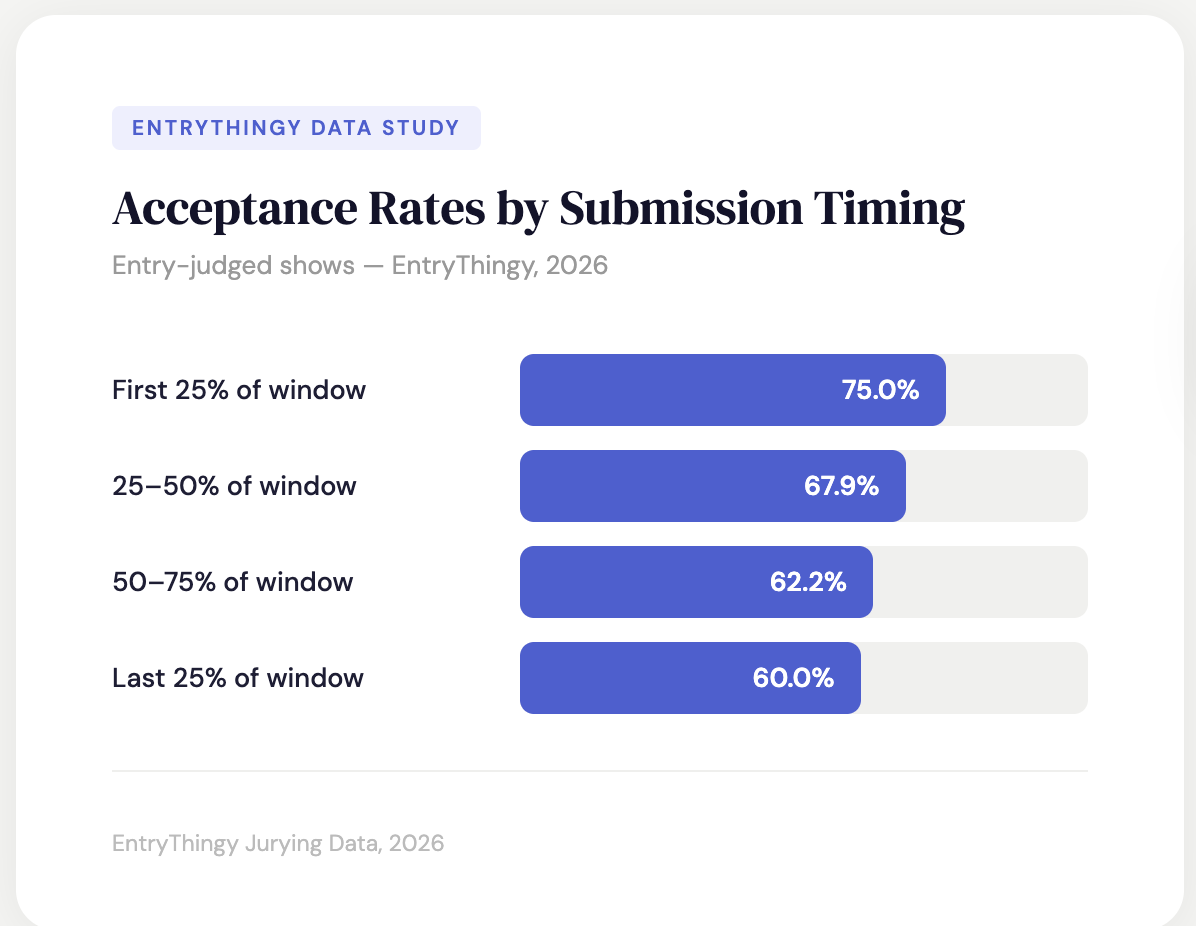
That's a 15-point difference, roughly the same as the gap between a first-time submitter and someone with 4 to 10 submissions of experience.
However, that does not mean filing early gives you an advantage with jurors. Most shows are reviewed after the deadline closes, so jurors have no way of knowing when a piece was submitted.
What the data most likely reflects is something simpler. Artists who submit early tend to be more prepared. Their portfolio is ready. Their artist statement is written. Their images are properly photographed and sized. That level of preparation shows up in the quality of the application itself, and that is what makes the difference.
Artists who submit at the last minute are often rushing. A rushed application is rarely as strong as one that was put together with enough time to review and refine it.
Our step-by-step guide on how to apply to art calls is a good place to start if you want to build a stronger process.
Find Art Calls That Are Worth Your Time
The data above gives you a clearer picture of what you're walking into, but individual shows still vary widely.
A show with an 80% acceptance rate and one with a 15% rate can both appear in a generic open calls list with no distinction between them.
EntryThingy lists active, verified calls with entry fees, deadlines, eligibility, and medium requirements shown upfront, so you can evaluate each opportunity before you spend time or money applying.
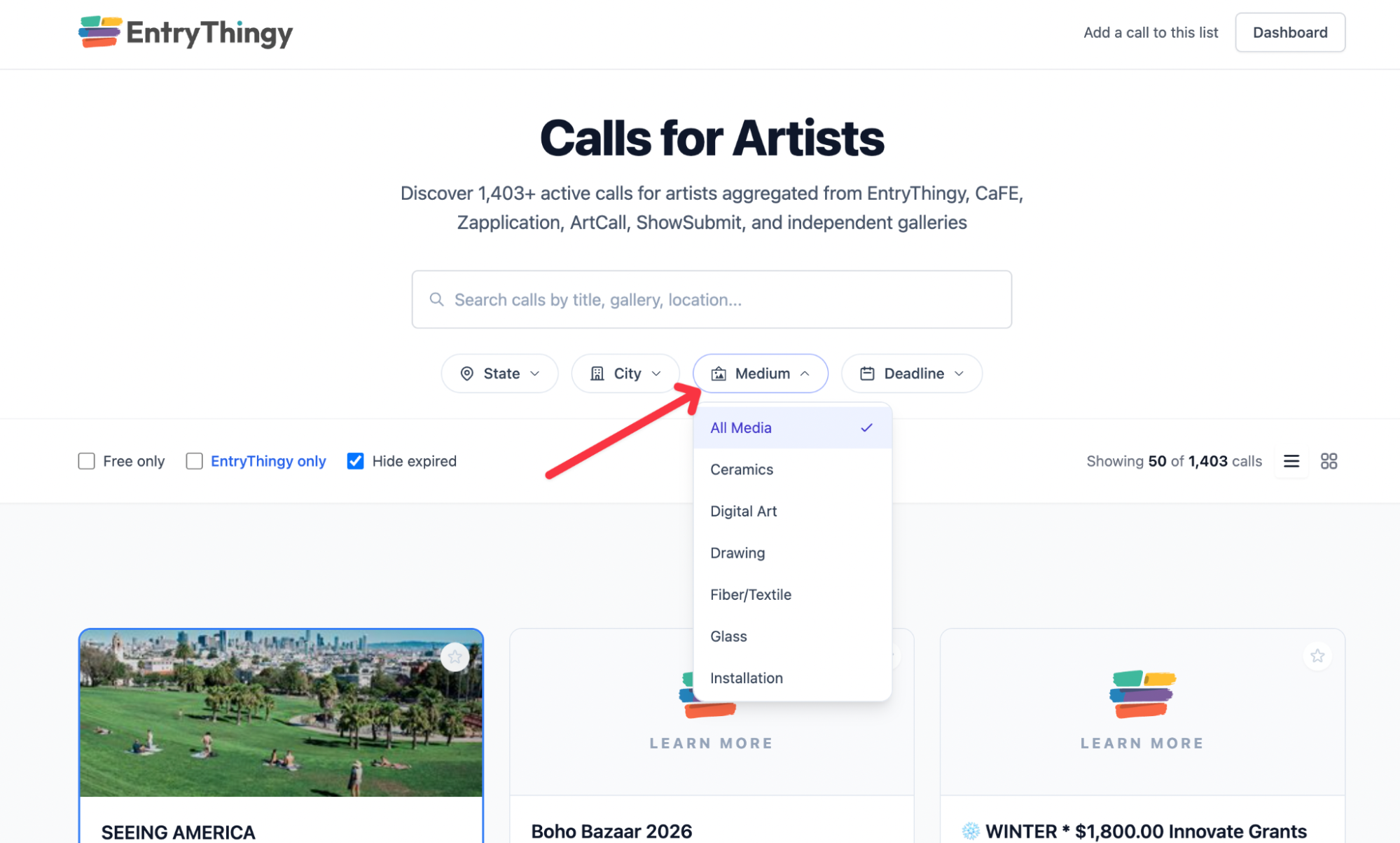
If you're looking for calls in your medium specifically, you can filter directly by type. And if you want to make sure you're not walking into a scam, our guide on how to spot scam calls for art covers the red flags to watch for.
Browse active, verified art calls with fees, deadlines, and eligibility shown upfront — so you can find the right opportunities before applying.
Browse Art Calls on EntryThingyCommon Questions About Art Call Acceptance Rates
What percentage of art submissions actually get accepted?
It depends on the jurying model. In entry-juried shows, 62.4% of entries are accepted. In piece-juried shows, where jurors evaluate each artwork individually, 35.6% of pieces are accepted. Most shows are more accessible than artists expect.
Does the medium I work in affect my chances of getting accepted?
Yes. Acceptance rates range from 45.6% for colored pencil to 26.6% for encaustic across piece-juried shows on EntryThingy. Works on paper tend to perform well in digital jury review. The most submitted mediums (acrylic and oil) fall in the bottom half, likely due to higher competition.
Do more experienced artists get accepted more often?
The data says yes. Artists with 4 to 10 prior submissions are accepted at 78.5%, compared to 58.3% for first-timers. This reflects a learning curve: better images, stronger statements, smarter show selection — not just talent.
Does submitting early actually improve your chances?
Artists who submit in the first quarter of a call's window are accepted at 75%, versus 60% for last-minute submitters. Early submission signals preparedness, and preparedness is what jurors actually respond to.